5 min
When Motor Coordination Improves, Speech Often Follows: A Clinical Pattern I’ve Seen Repeatedly
In my years of working closely with neurodiverse children, I have observed a pattern that has been too consistent to ignore: as motor coordination improves, speech often improves alongside it.
Category
Category
Date
May 5, 2026
Date
May 5, 2026
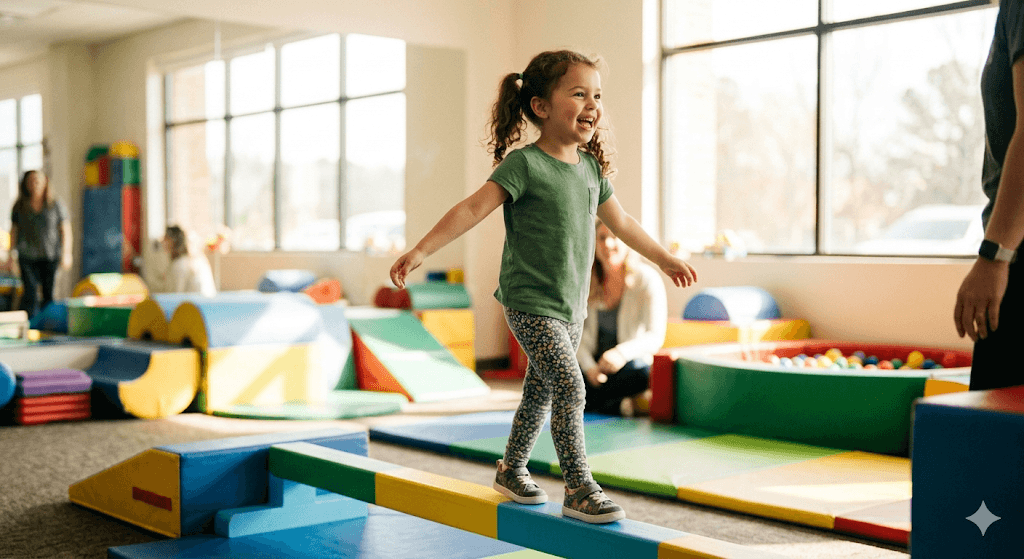
In my years of working closely with neurodiverse children, I have observed a pattern that has been too consistent to ignore: as motor coordination improves, speech often improves alongside it.
This is not limited to one diagnosis, one age group, or one therapy model. I have seen this pattern across children with autism, ADHD, dyspraxia, sensory processing differences, and broader motor planning challenges. While each child’s journey is unique, the connection between movement and communication has repeatedly stood out in my clinical experience.
Speech Is More Than Language
Speech is often approached as a purely linguistic skill—vocabulary, sentence formation, or sound production. However, speech is also one of the most complex motor coordination tasks the human body performs.
To speak, the brain must:
Plan precise movement sequences
Coordinate lips, tongue, jaw, breath, and voice
Maintain timing, rhythm, and force control
Continuously adjust using sensory feedback
When motor planning or coordination is inefficient, speech can appear delayed, inconsistent, effortful, or limited—even when comprehension and intent are strong.
Patterns Observed in Neurodiverse Children
In practice, I have consistently noticed that children who struggle with:
Balance and postural control
Bilateral coordination
Motor sequencing
Body awareness (proprioception)
General motor planning
...often show parallel challenges in speech—such as reduced clarity, difficulty initiating speech, inconsistent sound production, or speech fatigue.
What has been particularly striking is what happens next. As these children begin to develop better gross and fine motor coordination, improvements in speech often follow:
Articulation becomes clearer
Speech becomes more consistent
Breath control improves
Verbal confidence increases
Speech progress does not appear random—it often emerges after the body becomes more organised.
Why Motor Coordination Supports Speech Development
Motor coordination plays a foundational role in:
Praxis (the ability to plan and execute movements)
Timing and rhythm
Sensory integration
Regulation of muscle tone and effort
Speech depends on all of these systems. When the nervous system is dysregulated or motor planning pathways are overloaded, communication becomes harder—even if the child “knows what they want to say.” Once coordination improves, the brain can allocate resources more efficiently, allowing speech to emerge with greater ease and stability.
When Traditional Speech Therapy Plateaus
There have also been times when progress in speech therapy slows—not because the child lacks language, but because their motor system is not yet ready.
In these situations, incorporating:
Movement-based regulation
Coordination and sequencing activities
Rhythmic and pacing tasks
Core stability and postural support
...has often helped unlock speech gains that previously seemed stuck. This has reinforced for me that speech therapy does not always need more drills—sometimes it needs better bodily readiness.
A Whole-Child Perspective
These observations have shaped how I approach assessment and intervention. Supporting communication cannot be limited to speech alone. The body, brain, and nervous system work together.
Speech does not emerge from a disembodied mind. It emerges from a regulated, coordinated body.
Final Reflection
While research continues to deepen our understanding of brain–body connections, clinical practice often reveals patterns long before they are formally named. From my experience, one insight remains consistent: When motor coordination strengthens, speech often finds its rhythm.
Recognising and respecting this connection allows us to support neurodiverse children in a more holistic, effective, and compassionate way.
In my years of working closely with neurodiverse children, I have observed a pattern that has been too consistent to ignore: as motor coordination improves, speech often improves alongside it.
This is not limited to one diagnosis, one age group, or one therapy model. I have seen this pattern across children with autism, ADHD, dyspraxia, sensory processing differences, and broader motor planning challenges. While each child’s journey is unique, the connection between movement and communication has repeatedly stood out in my clinical experience.
Speech Is More Than Language
Speech is often approached as a purely linguistic skill—vocabulary, sentence formation, or sound production. However, speech is also one of the most complex motor coordination tasks the human body performs.
To speak, the brain must:
Plan precise movement sequences
Coordinate lips, tongue, jaw, breath, and voice
Maintain timing, rhythm, and force control
Continuously adjust using sensory feedback
When motor planning or coordination is inefficient, speech can appear delayed, inconsistent, effortful, or limited—even when comprehension and intent are strong.
Patterns Observed in Neurodiverse Children
In practice, I have consistently noticed that children who struggle with:
Balance and postural control
Bilateral coordination
Motor sequencing
Body awareness (proprioception)
General motor planning
...often show parallel challenges in speech—such as reduced clarity, difficulty initiating speech, inconsistent sound production, or speech fatigue.
What has been particularly striking is what happens next. As these children begin to develop better gross and fine motor coordination, improvements in speech often follow:
Articulation becomes clearer
Speech becomes more consistent
Breath control improves
Verbal confidence increases
Speech progress does not appear random—it often emerges after the body becomes more organised.
Why Motor Coordination Supports Speech Development
Motor coordination plays a foundational role in:
Praxis (the ability to plan and execute movements)
Timing and rhythm
Sensory integration
Regulation of muscle tone and effort
Speech depends on all of these systems. When the nervous system is dysregulated or motor planning pathways are overloaded, communication becomes harder—even if the child “knows what they want to say.” Once coordination improves, the brain can allocate resources more efficiently, allowing speech to emerge with greater ease and stability.
When Traditional Speech Therapy Plateaus
There have also been times when progress in speech therapy slows—not because the child lacks language, but because their motor system is not yet ready.
In these situations, incorporating:
Movement-based regulation
Coordination and sequencing activities
Rhythmic and pacing tasks
Core stability and postural support
...has often helped unlock speech gains that previously seemed stuck. This has reinforced for me that speech therapy does not always need more drills—sometimes it needs better bodily readiness.
A Whole-Child Perspective
These observations have shaped how I approach assessment and intervention. Supporting communication cannot be limited to speech alone. The body, brain, and nervous system work together.
Speech does not emerge from a disembodied mind. It emerges from a regulated, coordinated body.
Final Reflection
While research continues to deepen our understanding of brain–body connections, clinical practice often reveals patterns long before they are formally named. From my experience, one insight remains consistent: When motor coordination strengthens, speech often finds its rhythm.
Recognising and respecting this connection allows us to support neurodiverse children in a more holistic, effective, and compassionate way.

Related Blogs
Explore more related projects that delivered real impact and lasting growth.